
"Central American coffee history"
800 article(s) found

A brief introduction to the History and Culture of the Origin and Development of Fine Coffee beans in Mercedes Manor
There are more than 160 churches here (another source: there are 76 churches in the urban area), making it the city with the largest number of churches in Latin America. A Gothic church with bright lines and a handsome shape; a luxurious Baroque church with undulating lines and a sense of movement; the largest church is the church of Vasilla; the oldest is the church of the Madonna of Martris; built in 1549; the most magnificent St.

A brief introduction to the History and Culture of the Origin and Development of Boutique Coffee in Nicaragua
Coffee is a pillar industry in Nicaragua, producing nearly 100,000 tons of coffee beans every year. Many people who have tasted Nicaraguan coffee usually think that it is no different from Salvadoran coffee or Honduran coffee. It is full-bodied, smooth and delicate, with a slightly bitter finish, like a faint taste in a wine. In many countries, coffee production will be seriously affected for political reasons.

The Best Coffee in Vietnam: an introduction to the planting varieties and Cultural History of Central Plains Coffee in Bangmei and Shu
For the exchange of professional baristas, please follow the coffee workshop (Wechat official account cafe_style) located in the Central Plains Coffee headquarters in Bang Mei Shu, where you can enjoy the variety, history and culture of coffee. As early as the French colonial period, Vietnam began to grow a large number of coffee, but also cultivated Vietnam's unique coffee culture, coffee as water, it has long been common, but in fact, Vietnam's coffee industry is in recent decades.

What coffee brands in the American coffee country Puerto Rico grow coffee?
Professional coffee knowledge exchange more coffee bean information please pay attention to the coffee workshop (Wechat official account cafe_style) Puerto Rico Yaoke and Jamaica are the Greater Antilles, located in the Central American Atlantic Ocean, is a well-known island bean-rich country. This batch comes from the Central Mountains of Puerto Rico, with an average elevation of 914 meters. Puerto Rican coffee has a history of more than two hundred years. In 1736

The History of Costa Rican Coffee will Costa Rican coffee be very fruity?
Professional coffee knowledge exchange more coffee bean information please follow the coffee workshop (Wechat official account cafe_style) what are the Costa Rican coffee brands? Coffee from Costa Rica has always been very popular with guests. I have thought about why she was able to break out of other individual coffees: one of the famous representatives of Central American coffee; besides the rich flavor and excellent quality of coffee

A brief introduction to the history and culture of the origin and development of boutique coffee beans in Mercedes Manor with balanced taste
In the early 1990s, guerrilla warfare greatly damaged the country's national economy, reducing coffee production from 3.5 million bags in the early 1970s to 2.5 million bags in 1990 and 1991. The eastern part of the country was most affected by guerrilla warfare, and many farmers and workers were forced to leave the manor. The shortage of funds has led to a sharp drop in coffee production, from 1200 kg per hectare in the past to less than 9 per hectare today.

Latin American coffee history, Latin American coffee aroma, brightness and taste
Following Cafe (official Wechat account vdailycom) found that Beautiful Caf é opened a small shop of its own. In the 17th century, the cultivation and production of coffee was monopolized by Arabs. It was valuable in Europe, and only senior European people could drink coffee. Until 1690, a Dutch captain sailed to Yemen, got some coffee seedlings, and began in Dutch India (present-day Indonesia).

Fruit aroma sour and sweet feeling Salvador Pacamara boutique coffee beans origin development history culture Jane
Salvadoran coffee is a Central American specialty, light, aromatic, pure and slightly acidic. Like Guatemala and Costa Rica, coffee in El Salvador is graded according to altitude, with the higher the altitude, the better the coffee. The best brand is Pipil, which is Aztec Mayan for coffee, and it has acquired

Acidity Ideal Costa Rica San Roman Estate Fine Coffee Bean Origin Development History Culture Introduction
Costa Rican coffee is full of particles, with ideal acidity and unique aroma. Costa Rica's coffee industry, formerly controlled by the Instituto del Café de Costa Rica (ICAFE), has been taken over by the Official Coffee Council (Oficina del Caf). In coffee exports, those deemed substandard are marked with blue.

Bolivian coffee beans rich and unique origin and development history and culture brief introduction
Because Bolivia produces so little, we don't have much chance of drinking it. Because the smaller the yield, the more precious it was. For my personal preference for Central American coffee, I still have more expectations for Bolivia, a small and beautiful coffee-producing country. In the past, Bolivia's coffee was mostly of average quality, but in recent years, fine coffee production has developed rapidly and a lot has appeared.

Mexican coffee industry development history "magic country" tenacious southern coffee
Professional barista communication, please pay attention to coffee workshop (Weixin Official Accounts cafe_style) north latitude and climate can not grow coffee, coffee planting areas are in the south. Ninety percent of Mexico's coffee comes from four southern provinces: Chiapas (35 percent), Oaxaca (13 percent), Puebla (15 percent) and Veracruz (25 percent). There are nearly half a million people engaged in coffee cultivation in the country

A brief History of Coffee which countries in the world produce coffee
Costa Rica, Spanish La Republic de Costa Rica, English the Republic of Costa Rica, full name Costa Rica. San Jose, the capital, San Jose. The official language is Spanish. The administration is divided into 7 provinces, 81 counties and cities and 421 districts. In 1502, Columbus first discovered the coast of CR during his fourth voyage. Subsequently, Spain tried many times.

Characteristics of Costa Rican Black Pearl Coffee Lajas processing Plant about Coffee Cherry Fruit
About Costa Rica's coffee about Costa Rica has a history of more than 200 years. It is not only an important basis for the country's economy and people's livelihood, but also an indispensable role in the global coffee history. In the past decade, it has become popular all over the world as a micro-processing farm. In this small Central American country, it has created thousands of positions because of its special geographical environment.

History and Culture of Tarasu Coffee Origin in Costa Rica
Tarasu is located south of the country's capital, San Jos, and is one of the country's most prized coffee plantations. La Minita Tarrazu coffee is locally famous, but the production is limited, about 72600 kg per year, it is grown on a piece of land called La Minita, the land of the McAlpine family in Britain.

What kind of Latin American coffee do you have? Introduction to Starbucks Honduran Coffee Wash Makala Coffee
Professional coffee knowledge exchange more coffee bean information please follow the coffee workshop (Wechat official account cafe_style) the refreshing and lively acidity of Latin America, with nutty, cocoa and soft spice flavors. Honduras is a very beautiful country and occupies an important position in the history of Central America. Until around 900 AD, the ancient city of Copan Maya

Latin American coffee bean flavor description characteristics planting history of planting varieties
Professional barista communication please pay attention to the coffee workshop (Wechat official account cafe_style) Guatemala (Guatemala) aroma 3.5 minutes brightness 4.5 minutes mellow 3.5 minutes flavor 4.5 minutes aftertaste 4.5 points suitable for roasting degree: Light/Medial/City shallow roasting, city degree can best show the characteristics of Guatemalan coffee, too deep will reduce the fruit aroma, if you like the smoky taste
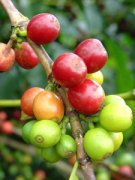
Costa Rican Coffee Flavor Costa Rican Fine Coffee Beans
Costa Rica was the first country to introduce coffee into Central America. It has a long history and a complete coffee organization system from production to sales. Because it is located in the Central American Isthmus, there are many volcanoes in the territory, it has the natural advantages of sunshine and land, and the climate is simultaneously coordinated by the Pacific Ocean and Atlantic Ocean currents and sea breezes. The coffee produced has the characteristics of local micro-climate and terroir conditions, both in quality and quantity.

Introduction to the Flavor description and Grinding degree of Diamond Hill Pocket Coffee in Bogut Jade Manor, Panama
Panamanian Coffee in 1823, the Central American Federal Republic, composed of Guatemala, El Salvador, Honduras, Nicaragua and Costa Rica, formally submitted a request to the United States for assistance in the construction of the canal. In June of the following year, Simon Bolivar, the father of Latin American freedom, formally put on the agenda at the international conference held by Simon Bolivar, the father of Latin American freedom. In the proposed four

The history of Mexican coffee beans and the description of the flavor of Mexican coffee beans.
Follow the caf é (Wechat official account vdailycom) found that the good Cafe opened a small shop of its own Mexican coffee growing region near Guatemala, the production classification belongs to the Central American type. The main producing areas are: Kolabegu and Aluca states, the products are mostly washed beans produced in the highlands, with good aroma and sour taste, the grade is divided into three categories according to altitude: Aldo

The coffee producing area of Brenka, Costa Rica introduces the coffee flavor of Costa Rican treasure manor.
Professional coffee knowledge exchange more coffee bean information please follow coffee workshop (Wechat official account cafe_style) □ Costa Rican coffee has a history of more than 200 years, it is not only an important foundation of the country's economy and people's livelihood, but also an indispensable role in the global coffee history, in the past decade, it has become popular all over the world as a micro-processing farm, in this small Central American country, because